
01 · The reported fault
Spitting, crackling and popping.
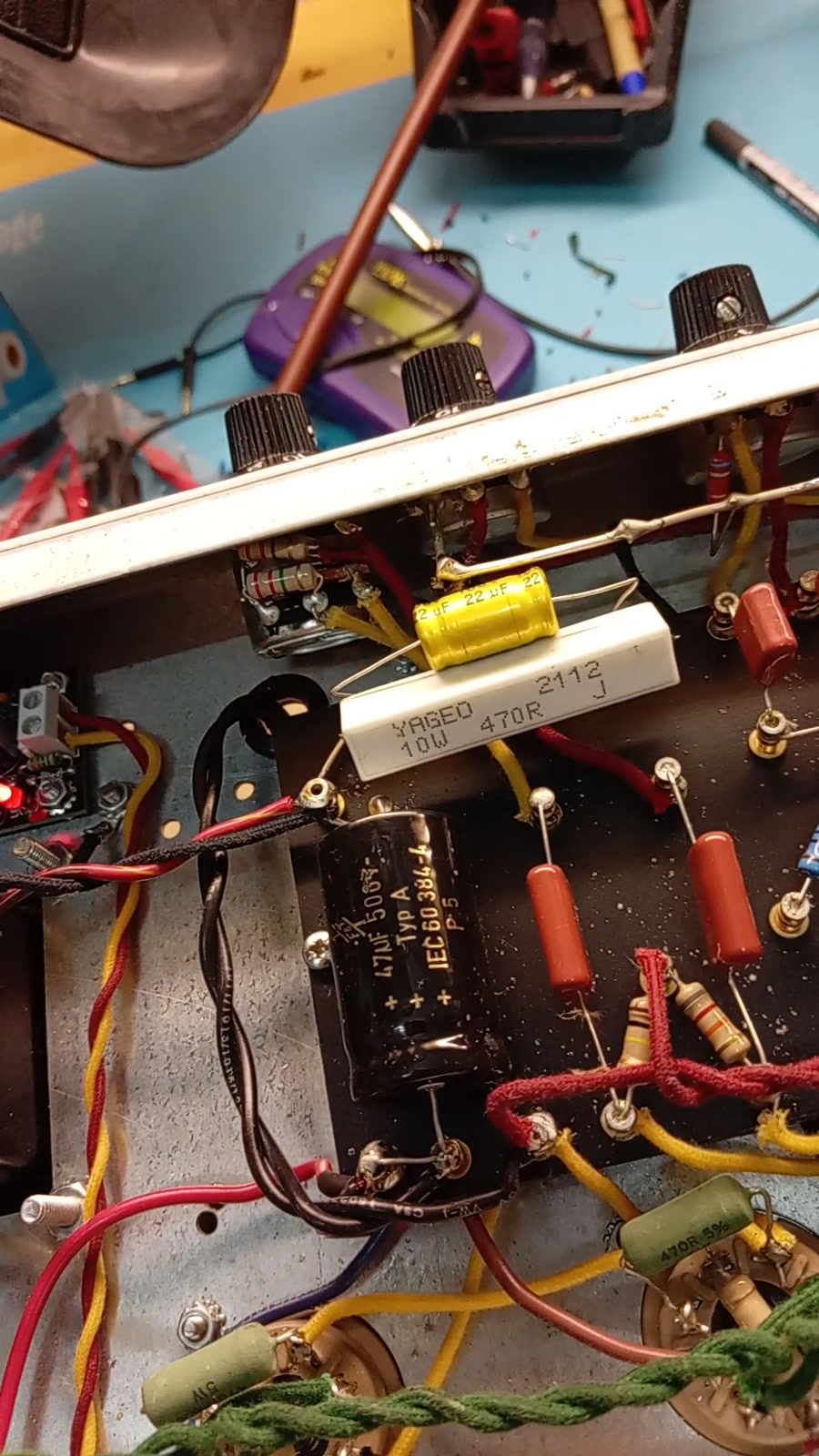
The amplifier arrived with intermittent noises that were particularly noticeable through the reverb circuit. I reproduced the fault with the amplifier connected to a speaker, then isolated the reverb send and return paths in stages.
Disconnecting the reverb send significantly reduced the noise. Further isolation established that the reverb tank itself was not the source, so the investigation continued through the surrounding circuitry.
02 · Following the signal path
Checking before replacing.
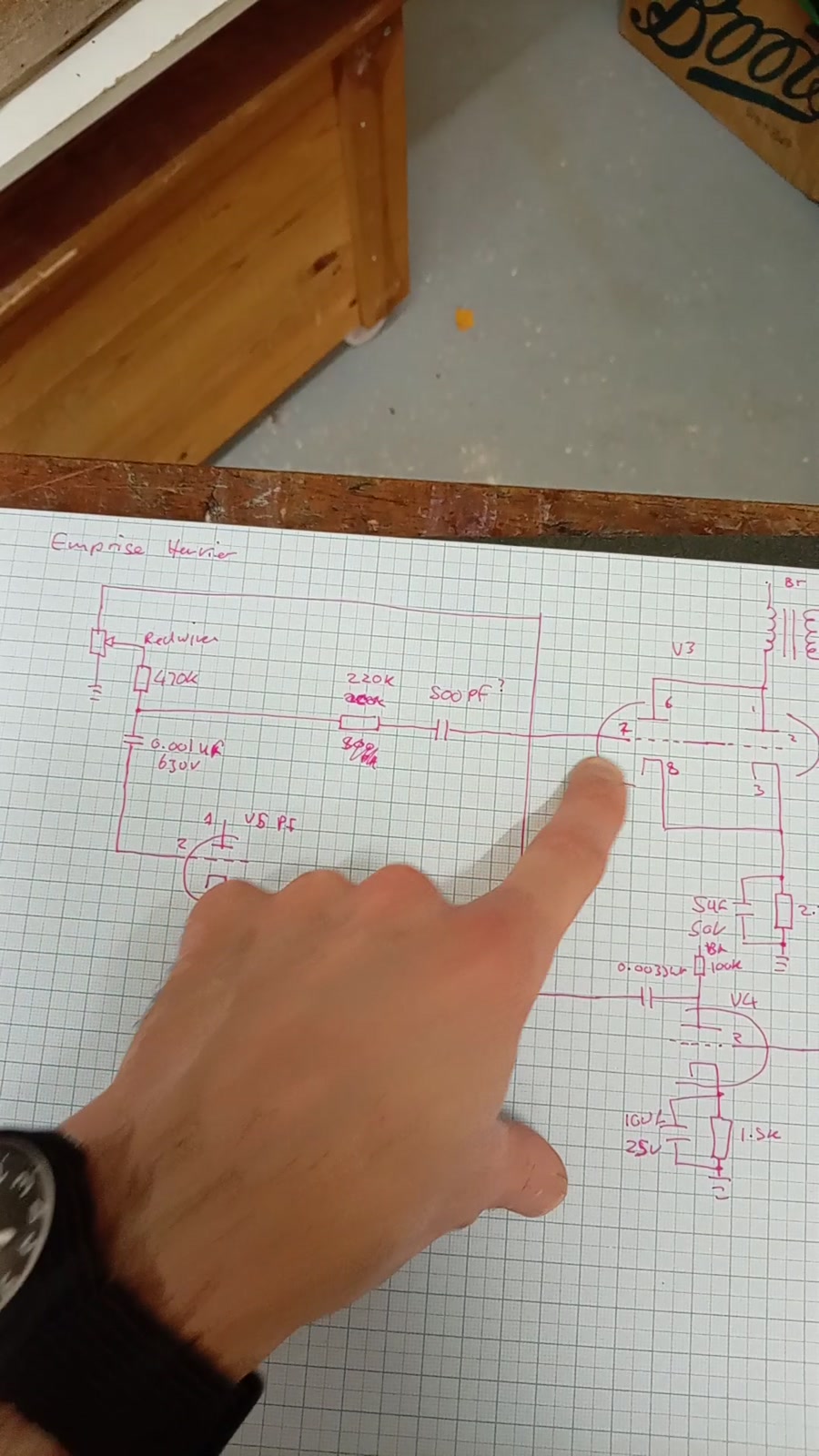
I traced the signal path through the reverb level control towards the phase inverter, checking components and connections along the way. The reverb send feed capacitor was isolated and a replacement tried. Valve removal and substitution were also used during diagnosis.
The reverb HT filter capacitor and 5 µF cathode bypass capacitor were individually disconnected and checked; neither was identified as the cause. A capacitor that responded to tapping was substituted, but that did not eliminate the original noise. The ECC81 phase inverter tested satisfactorily at 8/8.
03 · The confirmed fault
An open-circuit primary winding.
With the original reverb drive transformer primary isolated from the surrounding circuit, resistance testing showed that its primary winding was open circuit. The secondary measured approximately 1 Ω.
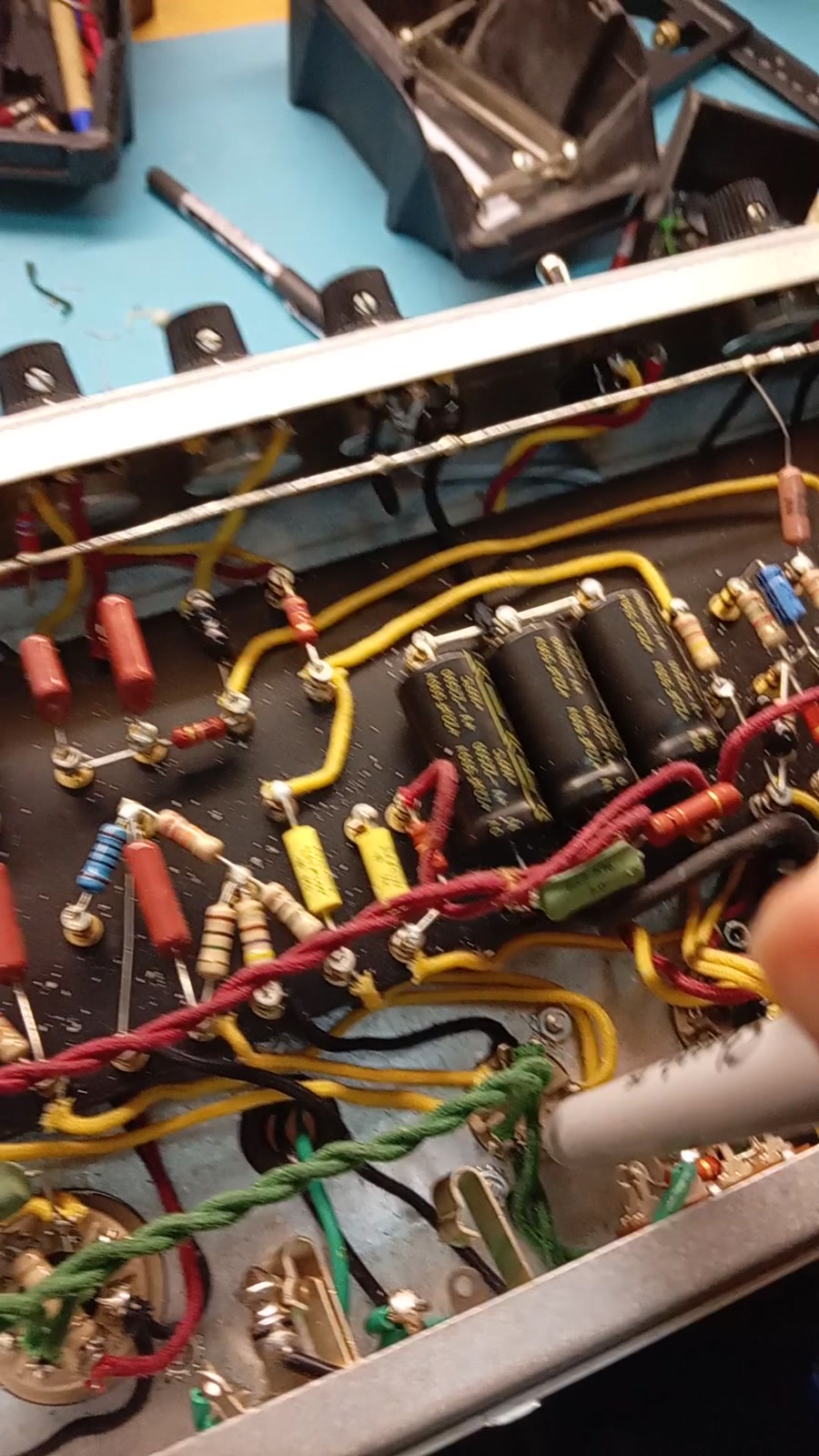
I removed the defective transformer and fitted a replacement Modulus reverb transformer. Its primary measured 1.07 kΩ before installation.
04 · Testing the result
The reported noise was no longer present.
After installation, I powered up the amplifier, listened to it and carried out a play test. The previously reported spitting, crackling and popping noises were no longer present. Replacement of the faulty transformer resolved the reported amplifier fault during that final test.
Manufacturer service documentation and reference operating voltages were unavailable. Electrical operating measurements were therefore not verified against manufacturer specifications; no such verification is claimed.
Separate bench work
Nine loose valves checked.
Nine loose valves supplied for testing were also checked using the Orange valve tester. All tested good. One JJ ECC83S showed mild microphonics, which were not considered problematic during testing. These were separate loose-valve checks, not a claim that all nine valves were fitted to this amplifier.