
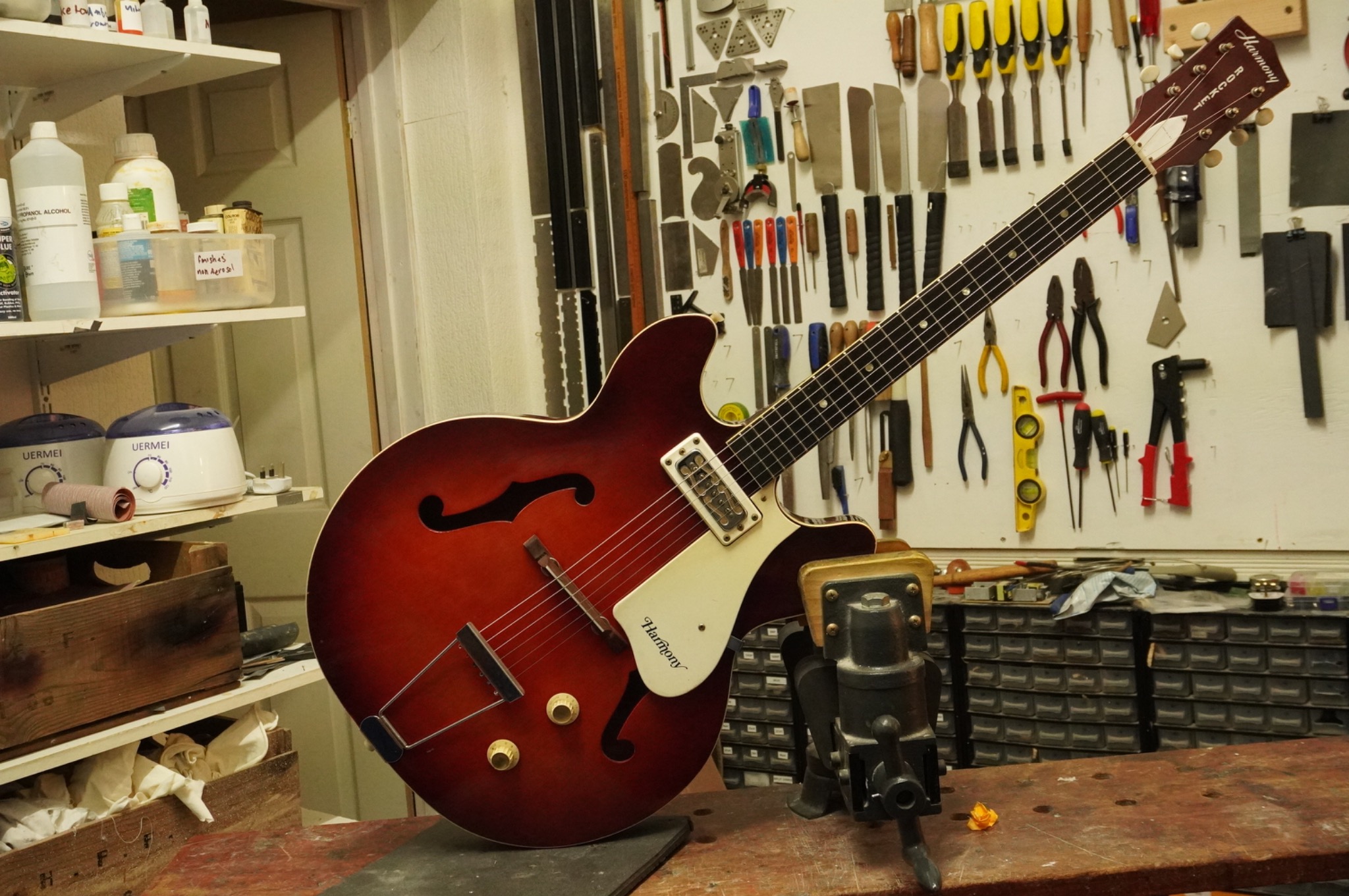
Cleaning and assessing the guitar
The tailpiece, scratchplate and machine heads were removed as needed to allow access for cleaning. The aged nitrocellulose finish on the body and neck was cleaned and polished, the fingerboard cleaned and oiled, and the frets cleaned and polished.
Putting the mechanical details right
A neck shim was fitted to achieve the required neck geometry. The floating bridge’s threaded posts had become detached from the saddle section; they were re-glued securely before the bridge was reassembled.
The split truss-rod cover was repaired and refitted. The string ferrules were checked, and the end pin and strap button were refitted.
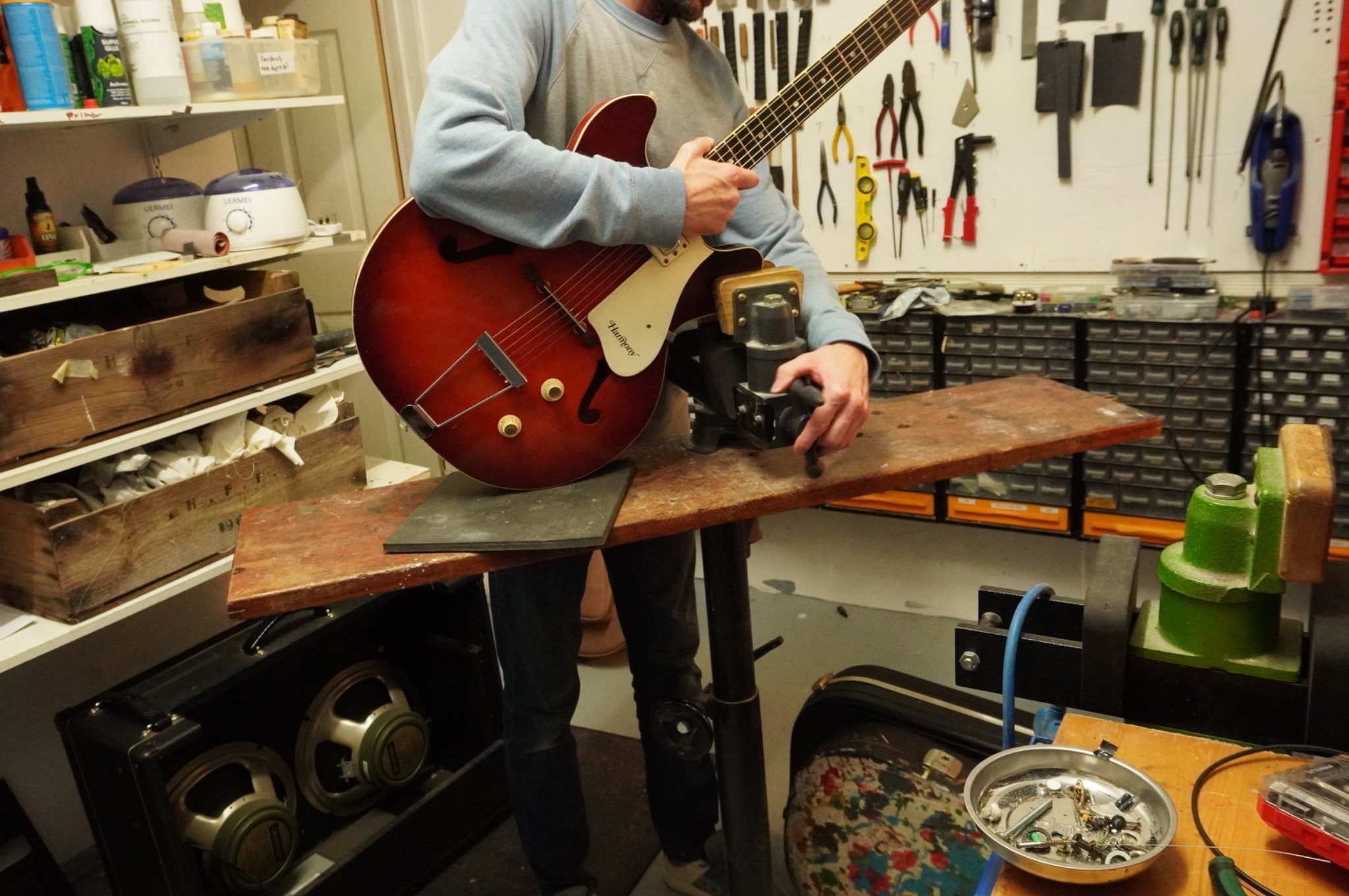
Setting the playing feel
The guitar was restrung with D’Addario 10–46 strings. A small truss-rod adjustment introduced approximately 0.004 inch of neck relief. The nut was satisfactory and needed no adjustment; no significant high frets were found.
The final action at the 17th fret was 4/64 inch on the low E, A and D strings, 3.5/64 inch on the G, and 3/64 inch on the B and high E. These settings describe this particular setup, rather than a fixed specification for every guitar.
Balancing the pickup and intonation
The adjustable pickup pole pieces were balanced at approximately 5/64 inch string clearance. The floating bridge intonation was set using the 5th and 17th fret positions on the outer strings, giving good overall intonation within the normal limitations of this bridge design.